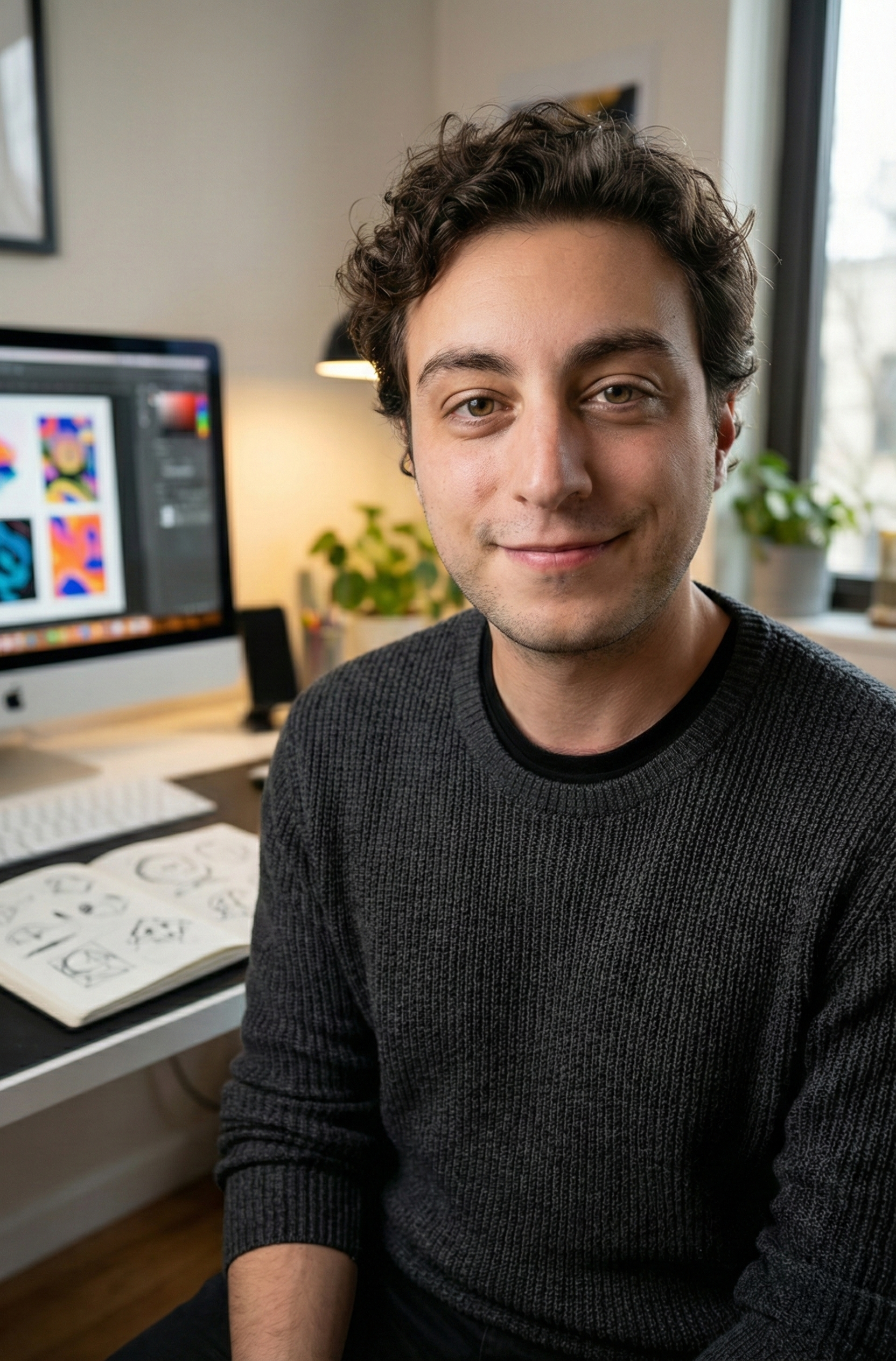
Hi, I’m Byron Stanford.
I care about how creative work actually gets made.
A lot of my work sits between ideas and execution. This is the part of the process where tools, timelines, people, and taste start to collide in real projects. I’m interested in building systems that support creative intent instead of getting in the way of it. That means workflows that are flexible, understandable, and able to hold up under real production pressure.
I approach systems the same way I approach visuals. With attention, restraint, and respect for the craft.
BACKGROUND
I started in graphic design, where structure, hierarchy, and clarity matter as much as aesthetics. That foundation shaped how I think about visual work and decision making long before I moved into motion design and video production.
Over time, my work expanded into motion, 3D, and larger production pipelines across studios, agencies, and organizations. As projects became more complex, I started spending more time fixing workflows and processes as part of getting the work done on time and to a high standard.
Working across static design, motion, and production environments gave me a clear view of where systems support creative work and where they quietly undermine it. That experience continues to inform how I design workflows today, especially when introducing new tools or automation into existing creative processes.
Why systems
I started building systems out of necessity.
Repetitive tasks, unclear processes, and fragile workflows don’t just cost time. They drain attention and flatten creative decision making. When too much energy goes into managing tools, there’s less left for judgment, taste, and experimentation.
Good systems don’t replace creativity. They protect it. They remove friction where it doesn’t matter and preserve control where it does. That way of thinking guides everything I build, whether it’s a production pipeline, an internal tool, or an experimental workflow.
Working with AI
I treat AI as a material, not a shortcut.
Used carelessly, it can introduce noise, inconsistency, and loss of authorship. Used thoughtfully, it can reduce repetition, expand creative options, and make space for better decisions. I’m less interested in what AI can do on its own than how it behaves when it’s part of a real workflow.
Most of my work with AI focuses on constraint. Grounding generative systems in structure, context, and intent so they support existing creative processes instead of overriding them.
How I work
I tend to work best in environments where complexity is unavoidable and clarity matters. I’m comfortable experimenting, but I care most about what survives contact with production, not what looks good in a demo.
Most of the systems I build start as tools I need myself. They only grow into something larger once they’ve proven useful in real work.
I also teach and speak about these systems as applied practice, not theory.
I’ve presented at SIGGRAPH, taught at Camp Mograph, and worked with teams and organizations to make new tools understandable and usable in real production settings. Teaching is an extension of my systems work. It’s about translating complexity into something people can reason about, adapt, and trust.
The goal isn’t to chase trends. It’s to help creative teams make better decisions about what’s worth adopting and what isn’t. This work often happens inside real production teams, not just classrooms.
Teaching and sharing
Let’s talk
If you’re thinking through creative systems, production workflows, or how to apply AI without losing control or taste, I’m always open to a conversation.
You can learn more about how I work or reach out directly to start a discussion.